
What Most People Miss About Money | Finding Contentment and Generosity in Christ
Table of Contents:
Contentment from Christ changes how we view money
Why generosity begins in the heart
Giving is more than finances. It is worship
The true riches every believer already has
Money is one of the most powerful tools in daily life. We use it to pay bills, care for our families, build homes, create memories, and plan for the future. But money can also become a source of pressure, conflict, debt, fear, and division. It can bless a household or burden it. It can serve God’s purposes or quietly begin to take God’s place.
That is why conversations about money matter so much. Not because the church wants something from people, but because God wants something for people. Scripture speaks often about money because money so often reveals what is happening in the human heart.
In this final message from the Unstoppable Joy series through Philippians, we are reminded that joy and generosity are deeply connected. In Philippians 4, the Apostle Paul shows us that the key issue is not simply how much money we have. The deeper issue is whether our hearts are content in Christ. At Arroyo Church, we believe this is especially important in Livermore and across the Bay Area, where ambition, pressure, and comparison can leave people spiritually dry. In a region that often feels like a spiritual desert, Jesus invites us to become a river of grace, generosity, and trust.
Contentment from Christ cultivates generosity
One of the clearest themes in Philippians 4 is that contentment is learned, not automatic. Paul says he had learned the secret of being content whether he had little or plenty. That matters because our culture constantly teaches the opposite.
The world tells us contentment is always one purchase, promotion, or financial milestone away. Once you get the bigger house, the higher salary, the better lifestyle, then you will finally feel secure. But that finish line keeps moving. What looked like “enough” last year suddenly does not feel like enough anymore.
Paul offers a better way. Real contentment is not found in circumstances but in Christ. That is the heart behind Philippians 4:13. It is not mainly about accomplishing impressive goals. It is about receiving strength from Jesus to remain steady, grateful, and surrendered in every season.
That kind of contentment changes how we handle money. When our peace comes from Christ, money loses its power to define us. We can hold what we have with open hands because we trust the One who provides.
This is an important word for the Bay Area, where success can easily become a measuring stick for identity. If we are not careful, we start believing that more stuff will make us more secure, more valuable, or more fulfilled. But Jesus offers something better than accumulation. He offers peace.
A practical step toward contentment is learning to rest in God’s loving care. Like a child at peace in a parent’s arms, we can come before God not just for what He gives, but for who He is. That is where a generous life begins.
Stop letting greed disguise itself as wisdom
Another major truth from this passage is that generosity is not mainly about income level. It is about spiritual posture. Paul praised the Philippian church for sharing with him faithfully, even though they were not the wealthiest church. Their example reminds us that generosity is possible in every season.
That challenges a common assumption: “I will be generous later, once I have more.” But if generosity is always postponed, it usually stays postponed. The issue is rarely about having enough. The issue is whether we trust God enough to live open-handedly now.
In affluent communities especially, greed can hide behind respectable language. We call it planning, caution, or comfort. Of course wisdom matters, and Scripture does not call us to irresponsibility. But sometimes the Holy Spirit gently exposes that what we call wisdom is really fear, or what we call caution is really self-protection.
Paul contrasts churches that held back with the Philippians, who gave consistently and sacrificially. Their generosity was not occasional or accidental. It was a pattern. They understood that following Jesus means moving from “me” to “we.”
That is true for church life too. A healthy church is not a place where people only consume. It is a community where people receive from God and then pour out for others. At Arroyo Church, that means we gather to worship, grow, serve, invite, and give together so more people in Livermore and the Tri-Valley can know and show the love of Jesus.
Generosity is an act of worship
Paul describes the Philippians’ gift as a fragrant offering, an acceptable sacrifice, pleasing to God. That language is deeply worshipful. Their giving was not merely a transaction. It was worship.
That is a needed correction for many of us. We often reduce worship to singing on Sunday, but biblical worship is much larger than music. Worship is how we live. It is how we trust. It is how we love. And yes, it is how we handle our money.
Jesus made this plain when He said we cannot serve both God and money. At some point, every heart chooses. We either worship God with our wealth, or we quietly worship wealth itself.
This is why generosity matters so much. It is not a side issue. It reveals allegiance. When we give cheerfully, consistently, and sacrificially, we are declaring that God is our source, our security, and our treasure.
For first-time guests or those exploring faith, this is also worth saying clearly: the invitation of Jesus is not first about giving money. It is first about giving Him your heart. God is not after reluctant religious performance. He is after surrendered lives transformed by grace.
You are richer than you think
Philippians 4 closes with one of the most encouraging promises in Scripture: God will supply every need according to His riches in glory in Christ Jesus.
That promise is not prosperity teaching. Paul is not saying God will fulfill every material desire. He is saying God is faithful to provide what His people truly need, and that provision flows from a much deeper treasure than earthly wealth.
The truest riches are found in the grace of God.
In Christ, we have forgiveness for our past, peace for our present, and hope for our future. We are loved not because we earned it, but because Jesus gave Himself for us. That is why Christians can live generously. We are not giving out of emptiness. We are giving out of abundance.
When grace becomes real to you, earthly wealth starts to shrink to its proper size. Money still matters, but it no longer rules. The love of Jesus becomes brighter, steadier, and more beautiful than the things this world sells.
And that is exactly the kind of witness our city needs. In Livermore and throughout the Bay Area, people are surrounded by pressure to achieve, consume, compare, and perform. The church has an opportunity to live differently. We can be a river in the spiritual desert by embodying contentment, worship, and generosity that point people to Jesus.
What most people miss about money is that the real issue is never just money. It is worship. It is trust. It is contentment. It is whether we believe Jesus is enough.
When we turn our eyes to Christ, the things of this world begin to lose their grip. We become freer to give, freer to trust, and freer to live for something bigger than ourselves. Whether you are new to faith or have followed Jesus for years, the invitation is the same: receive the riches of God’s grace, and let that grace shape every part of your life.
If you are looking for a church in Livermore, CA where you can grow in faith, experience authentic community, and learn what it means to know and show the love of Jesus, we would love to welcome you to Arroyo Church.
How Prayer Empowers You: Finding Strength Through Faith in Difficult Seasons
Table of Contents:
When Life Feels Too Heavy
Speaking to God During Suffering
Recognizing God’s Voice
Inviting God to Speak
Proclaiming God’s Word
Living Empowered by Prayer
When Life Feels Too Heavy
The world often tells us that the answer to hardship is self-empowerment. Work harder. Think more positively. Push through. While determination has value, there are burdens in life that simply cannot be carried through human strength alone.
That is exactly where Hannah found herself in 1 Samuel. She experienced deep heartbreak, years of infertility, and constant pain. Yet instead of allowing suffering to harden her heart, she brought her pain directly to God.
Her story teaches us an important truth: suffering will either drive us toward God or away from Him.
Speaking to God During Suffering
Hannah’s response to suffering offers a model for every believer.
1. Let Brokenness Lead to Prayerfulness
Pain has a way of exposing our need for God. Rather than becoming bitter, Hannah became prayerful. She poured out her heart before the Lord.
Many people ask, “Why is this happening to me?” during difficult seasons. While those questions are natural, prayer shifts our focus from demanding answers to seeking God’s presence.
Even when life is not good, God is still good.
2. Pray in Faith
Hannah addressed God as “Lord Almighty,” recognizing His power and authority. Her prayer reflected confidence that God could do what she could not accomplish herself.
Faith does not mean we control God’s actions. Rather, faith means trusting that God is able.
When we pray, we approach a God who can save, heal, restore, and transform. We may not always receive the answer we expect, but we can trust the One who hears us.
3. Surrender What God Gives You
Hannah promised that if God blessed her with a son, she would dedicate him back to the Lord.
This challenges us to evaluate our own prayers. Are we asking God for blessings solely for ourselves, or are we asking for opportunities to honor Him?
Whether it is a career, family, finances, or influence, every blessing becomes most meaningful when it is surrendered back to God for His purposes.
Recognizing God’s Voice
As Samuel grew, God began speaking to him. Yet Samuel initially failed to recognize God’s voice.
Why?
Because he was around the things of God without yet truly knowing God.
This is a powerful reminder that attending church and participating in religious activities are not substitutes for a personal relationship with Jesus Christ.
Jesus said:
“My sheep listen to my voice; I know them, and they follow me.”
When we develop a genuine relationship with Christ, we begin to recognize His voice more clearly.
How Do We Recognize God’s Voice?
God speaks with affirmation, not accusation.
The Holy Spirit reminds believers that they are loved children of God. While God convicts us of sin, He does not condemn those who belong to Him.
God never contradicts His Word.
Any message that opposes Scripture cannot come from the Holy Spirit. God’s character and truth remain consistent.
God leads us toward love.
The voice of God moves us toward loving Him and loving others, not toward selfishness, pride, or personal glory.
Inviting God to Speak
Prayer is not only speaking to God—it is also listening.
When Samuel finally understood what was happening, his response was simple:
“Speak, Lord, for your servant is listening.”
Those words reveal three practical habits for every believer.
Take Time to Listen
Many people wonder why they do not hear God’s voice. Often, the issue is not that God is silent but that life is loud.
Social media, entertainment, work demands, and endless distractions create spiritual noise that drowns out God’s voice.
Listening requires intentionality.
Listen to Be Led
Samuel approached God with humility. He came as a servant ready to obey.
Too often we listen only for information. God desires something deeper—transformation.
The question is not merely, “What is God saying?” but “Am I willing to follow where He leads?”
Read Scripture Slowly
One of the most powerful ways to hear God is through His Word.
Instead of rushing through Bible reading as a task to complete, slow down. Read a passage multiple times. Reflect on it. Pray through it. Ask God what He wants to reveal.
Transformation happens when Scripture moves from our minds into our hearts.
Proclaiming God’s Word
God did not speak to Samuel merely for Samuel’s benefit.
God spoke to Samuel so Samuel could speak to others.
As Samuel faithfully proclaimed God’s truth, Scripture tells us that none of his words fell to the ground. God’s power accompanied His message.
The same principle applies today.
Every follower of Jesus has been entrusted with the gospel—the good news that Christ lived the perfect life we could not live, died for our sins, and rose again so that we could be forgiven and adopted into God’s family.
We do not share the gospel because we have all the answers.
We share the gospel because God’s Word is powerful.
As Romans 1:16 declares, the gospel is “the power of God that brings salvation.”
Conclusion:
Prayer changes us because prayer connects us to God.
When we speak to God during suffering, recognize His voice, invite Him to speak through His Word, and boldly proclaim His truth, we experience His power in everyday life.
In a region that can often feel spiritually dry, God continues to call people into a living relationship with Him. Like Samuel, we are invited to respond.
God has already made the first move. He has already called your name.
The question is simple: Will you answer?
What to Do When You Feel Spiritually Stuck | Philippians 3 Sermon in Livermore, CA
Table of Contents:
Understanding that growth with Jesus is a process
Living with the right perspective
Holding on to the progress God has already built
Finding spiritual parents and mentors
Setting your mind on heaven, not just earth
It is hard to be stuck anywhere you never wanted to be in the first place. That feeling is frustrating in a parking garage, on the side of the road, or in a long season of uncertainty. But it is even heavier when the place you feel stuck is spiritual.
Maybe you feel stuck in anxious thought patterns. Maybe you are stuck in a relationship cycle that keeps breaking trust and peace. Maybe you are stuck in a habit, temptation, or sin that you keep returning to even though you desperately want freedom. The reality is that most people do not want to stay stuck, but many do not know how to get unstuck.
In this message from Philippians 3:10–21, Arroyo Church walks through five practical, biblical steps for what to do when you feel spiritually stuck. This is not a message about trying harder in your own strength. It is a message about pursuing Jesus, trusting His grace, and moving forward with unstoppable joy.
For anyone looking for a church in Livermore CA or searching for hope in the spiritual desert of the Bay Area, this message offers both truth and encouragement: God does not leave you stuck where He found you.
1. Pursuing Jesus is a process
One of the most freeing truths in this passage is that spiritual growth is not instant. The Apostle Paul says he wants to know Christ more deeply, even though he already knows Him. Paul had planted churches, preached the gospel boldly, and lived with remarkable faithfulness, yet he still said he had not reached perfection.
That matters because it means your growth in Christ is also a process.
Following Jesus is not a one-time emotional moment and then automatic maturity. Yes, when you trust in Christ, you are forgiven, made right with God, and welcomed into His family. But after that begins the lifelong journey of knowing Him more deeply. Growth takes time because we still live in a broken world, surrounded by brokenness, inside bodies that still wrestle with sin.
Sometimes growth is dramatic. Sometimes it is slow and hidden, like roots growing under the surface before anything visible appears. Some days you will feel strong. Other days you may feel stagnant. But none of that means God has abandoned His work in you.
The good news is that God is patient in the process. He does not walk away when you stumble. He does not stop loving you when growth feels slow. His patience is not permission to stay passive, but it is a reminder that failure is not the end of your story.
Real change begins when you stop pursuing Jesus out of guilt and start pursuing Him because He first loved you. That is the heartbeat of the gospel.
2. Live with the proper perspective
Paul says he is forgetting what is behind and straining toward what is ahead. That does not mean pretending the past never happened. It means refusing to let your past define your future.
Many people stay spiritually stuck because they live mentally anchored to old shame, old failures, old wounds, and old patterns. The enemy loves to keep replaying what was. God, however, keeps calling you toward what can be through His grace.
Maybe your past includes a fractured marriage, financial mistakes, addiction, regret, or years of spiritual drift. Those things are real. They should be acknowledged honestly. But they should not become the controlling narrative of your life.
When your focus stays on the past, you move backward. When your focus shifts to the future God has for you, you begin to move forward.
This is especially important in a region like the Bay Area, where many people are carrying quiet exhaustion, private discouragement, and deep spiritual hunger under outward success. God’s mercy is new every morning. In the middle of the spiritual desert, He is still making a way forward.
3. Do not lose the progress you have already made
Paul gives a simple but powerful instruction: hold on to the progress you have already made.
That is such an important word for anyone in a discouraging season. Feeling stuck can tempt you not only to stop moving forward, but to start sliding backward. When you are tired, disappointed, or spiritually numb, it can become easy to think, “Why keep trying?” That is often when old habits start calling your name again.
But one bad day does not need to become a destructive turning point.
There are seasons when thriving feels natural, and there are seasons when simply surviving with faithfulness is a victory. In those moments, do not underestimate the value of staying grounded. Keep praying. Keep showing up. Keep worshiping. Keep saying yes to the small acts of obedience that protect what God has already built in your life.
The enemy would love to convince you that because growth feels slow, your progress does not matter. But it does matter. Hold your ground in Christ.
4. Get spiritual parents
Paul tells the church to follow his example and learn from others who are faithfully walking with Jesus. That is a reminder that we were never meant to grow alone.
Sometimes the reason you feel stuck is not because God is absent, but because you are trying to navigate a difficult season without wise, godly people around you. We all need spiritual mothers, fathers, brothers, and sisters who can encourage us, challenge us, pray for us, and help us take the next step.
This is one of the reasons church community matters so much. Growth often happens in relationships before it is visible anywhere else. When you invite others into your journey, you create space for accountability, comfort, and wisdom.
If you are new to Arroyo, this is a great reminder that church is more than a Sunday service. It is a family. You can learn more through About Arroyo Church or begin connecting through Plan Your Visit.
And if you have been following Jesus for years, this message is also a challenge: become that steady presence for someone else. Someone around you needs a spiritual parent, not just a friendly face.
5. Ponder the right place
Paul contrasts two ways of living. One life is driven by appetite and focused only on the here and now. The other life remembers that our citizenship is in heaven.
This is a powerful key to getting unstuck. What fills your mind will shape your life. When you think only about temporary comfort, immediate gratification, and earthly success, your decisions will be shaped by short-term desires. But when you remember heaven, your perspective changes.
Thinking about heaven does not make you less useful on earth. It makes you more faithful here. It gives you hope in suffering and purpose in everyday life. You remember that pain is not permanent, temptation is not ultimate, and your calling is bigger than simply getting through another week.
As followers of Jesus, we are not just trying to have better habits or cleaner behavior. We are learning to live as citizens of another kingdom. That is how a church becomes a river in the spiritual desert of the Bay Area. When people know the love of Jesus and show the love of Jesus, hope begins to flow outward into homes, neighborhoods, workplaces, and schools.
If you are longing to grow deeper in your walk with Christ, resources like Devotional and community connections through Kids Ministry and other church gatherings can help you keep taking your next step.
If you feel spiritually stuck, the invitation of this message is simple and hopeful: do not stay there. Growth is a process. Your past does not have to define you. Your progress matters. You need godly people around you. And your mind must be fixed on heaven, not just earth.
Most of all, remember this: Jesus meets people in the middle of their mess. He does not wait for you to get unstuck before He loves you. He entered our brokenness, died for our sins, and rose again so that we could be forgiven, restored, and made new.
Where you are weak, He is strong. Where you cannot make a way, He can. And wherever you are today, you can call on His name and find grace for the next step.
Restoring Relational Wrecks: 4 Biblical Steps Toward Unstoppable Joy (Philippians 2:1–15)
Table of Contents (optional):
When relationships crash
Step 1: Find the right foundation for unity
Step 2: Choose humility like Jesus
Step 3: Work it out every day
Step 4: Avoid unconstructive conflict
No such thing as a “totaled” relationship in Jesus
When relationships crash, we need more than advice—we need a SaviorIt’s tempting to treat relational conflict like a simple problem to solve: say the right thing, set the right boundary, win the right argument. But Paul doesn’t start with a technique. He starts with Jesus. Because Christianity isn’t first a self-help plan—it’s an announcement of what Jesus has already done.If Jesus can reconcile enemies to God, He can restore what feels broken between people too.Step 1: Find the right foundation for unityPaul urges believers to be “likeminded… having the same love… one in spirit and of one mind.” But the key is where that unity comes from: union with Christ.Many of us try to build unity through uniformity—“If you were more like me, this would work.” Same habits. Same preferences. Same communication style. Same background. Same politics. Same pace. Same everything.But unity can’t survive on sameness, because people aren’t the same. Marriage makes that obvious fast. Friendships do too. Work teams certainly do. If uniformity is the foundation, every difference becomes a threat.Paul points to something deeper: because we are united to Christ, we can pursue unity with one another. In other words, unity isn’t “we finally agree on everything.” Unity is “we belong to Jesus, so we choose love, forgiveness, and faithfulness—even when we don’t match.”And if you’re trying to build your closest relationships without Jesus as the foundation, it’s like building on sand during an earthquake. You can still pursue peace, but it’s harder because you’re missing the deepest common ground: a shared Savior, a shared Spirit, and a shared direction.If you’re exploring faith or returning to church, consider starting here: learn who Jesus is and what He offers. A helpful next step is About Arroyo Church or making plans to visit in person: Plan Your Visit.Step 2: Choose humility like JesusPaul’s next move is bold: “Do nothing out of selfish ambition… in humility value others above yourselves.” Then he points to the ultimate example—Jesus—who took the form of a servant and humbled Himself to death on a cross.Here’s the heart of the gospel in one word: humility.Jesus humbled Himself so you wouldn’t be humiliated by your sin. He stepped toward sinners, enemies, and the broken—not away from them.And if Jesus restored your relationship with God by humility, He calls you to bring that same humility into your relationships.Three practical ways to practice humility:
Reprioritize whose interests matter most.Pride is obsessed with “my needs, my schedule, my comfort.” Humility learns to ask, “What matters to you?” Sometimes it’s as simple as serving someone in a way that doesn’t come naturally—choosing love over preference.
Make yourself a servant.Jesus didn’t serve for applause or a “tip.” He served because love serves. In marriage, friendship, and family life, a game-changing question is: “How can I serve you this week?” Even better: anticipate needs before you’re asked.
Be willing to sacrifice.Real love costs something—time, energy, comfort, convenience, pride. If it doesn’t “sting” a little, it might not be sacrifice. Humility says, “Your well-being matters more than my comfort.”
Step 3: Work it out every dayPaul says, “Continue to work out your salvation with fear and trembling, for it is God who works in you…”Notice the balance: God works in—but we work out.You don’t work for salvation. You work from salvation. Grace is a gift, not a paycheck. But spiritual growth requires daily practice—like building strength over time.This matters for relationships because we often want to “fix them” before we face ourselves. It’s easier to point out someone else’s flaws than to confront our own. But relational restoration often begins when you stop trying to manage them and start letting God transform you.Daily spiritual “workouts” can include prayer, Scripture, worship, confession, church community, fasting, and serving. If you want help building a rhythm, consider checking out the Devotional or getting connected in community when you visit: Plan Your Visit.Step 4: Avoid unconstructive conflictPaul gets painfully practical: “Do everything without grumbling or arguing… then you will shine… like stars.”In a “warped and crooked generation,” healthy relationships are a form of witness. In the Bay Area’s spiritual desert, where many people assume relationships are disposable and conflict is inevitable, a church that handles conflict with grace becomes a river—refreshing, noticeable, different.Three ways to kill destructive conflict before it kills your relationship:
Refuse to let pride create conflict.“Where there is strife, there is pride.” Pride says, “I must win.” Humility asks, “Do I want to win the argument—or win the relationship?” Sometimes love chooses to lay down being “right” to keep peace.
Speak gently (tone + words).“A gentle answer turns away wrath.” Gentleness doesn’t mean avoidance. It means you don’t escalate. You engage with care—truthful, calm, and steady.
End conflicts early.“Starting a quarrel is like breaching a dam.” Before the situation spirals, ask: Is this worth a full fight? Sometimes the wisest, most spiritual move is to drop it before it floods everything.
No such thing as a “totaled” relationship in JesusThe sermon’s hope is simple and strong: in Jesus, there are no totaled relationships.Scripture says that while we were God’s enemies, we were reconciled through Jesus. If God can restore that relationship, He can bring healing to the wrecks in your life too.And for some, the first “restoration” needed isn’t with a person—it’s with God. Because peace with others flows best from peace with Him.
Relational wrecks are real—and so is the pain. But Philippians 2 shows a pathway forward: build unity on Christ, practice humility like Jesus, work out your faith daily, and reject destructive conflict.If you’re carrying relational heartbreak today, you’re not alone—and you’re not without hope. Jesus is a restorer. In a spiritually thirsty place like the Bay Area, He invites us to become a river: people who bring grace, forgiveness, and healing into every relationship we touch.
Growing Deeper in Prayer: How Psalm 13 Teaches Us to Lament, Ask, and Trust God’s Love (Livermore, CA)
Table of Contents:
Why God Wants a Deeper Prayer Life
Step 1: Learn to Lament
Step 2: Ask God to Open Your Eyes
Step 3: Move From Lament to Looking at God’s Love
A Simple Prayer to Go Deeper This Week
Imagine someone took your phone away, dropped you in the woods, and said, “You have one hour to pray—alone.” How would you feel? Excited? Nervous? Unsure what you’d even say after five minutes? That question isn’t meant to shame anyone—because short prayers can absolutely be powerful. But it does spotlight something God wants for all of us: not just prayers that are frequent, but prayers that are deep.
At Arroyo Church here in Livermore, CA, we talk a lot about growing—growing deeper in the Word, growing deeper in community, and growing deeper in prayer. Because the purpose of your life isn’t merely to be “religious.” The purpose of your life is a personal relationship with Jesus—and one of the primary ways we step into that relationship is through prayer.
Psalm 13 gives us a picture of deep prayer. It’s raw, honest, and real. And it offers three steps that can move your prayer life from shallow to rooted—like a tree that can withstand life’s storms.
Why God Wants a Deeper Prayer LifeA shallow faith is easy to uproot. A deeper faith gets anchored. And prayer is one of the main ways our faith grows roots. Deep prayer doesn’t mean fancy words. It doesn’t mean you have to start every prayer with a polished script. In fact, Psalm 13 starts with the kind of words many of us hesitate to pray out loud: “How long, Lord?”That honesty matters—especially in the Bay Area, where many people live in what can feel like a spiritual desert. But God is forming Arroyo Church to be a river in the spiritual desert—a place where real people can bring real pain to a real Savior.Step 1: Learn to LamentPsalm 13 begins with lament:“How long, Lord? Will you forget me forever?… How long will you hide your face from me?” (Psalm 13:1–2)Lament isn’t just complaining. Lament is honestly expressing your pain to God. Scholars often note that a significant portion of the Psalms are laments—because life is tough, storms are real, and suffering is part of the human story.Here’s the surprising truth: lament is not irreverent. It’s relational. If you want a deep relationship with the Lord, you have to be honest with Him. God isn’t looking for a fake relationship filled with religious lines and happy masks. He wants the real you.Think about the healthiest human relationships you have. You’re honest with the people you’re closest to. You don’t share your deepest burdens with a stranger you just met in a checkout line. In the same way, a lack of lament often reveals a lack of depth. If we never bring our real pain to God, are we actually close to Him—or just performing?When should you lament? Psalm 13 gives four examples through David’s questions:
When you feel forgotten by God: “Will you forget me forever?”
When you feel far from God: “How long will you hide your face from me?”
When anxiety or depression is heavy: “How long must I wrestle with my thoughts… and have sorrow in my heart?”
When you’re dealing with conflict or attack: “How long will my enemy triumph over me?”
Lament doesn’t always remove the problem—but it can change your perspective. It’s the moment you say, “God, this burden is crushing me. I can’t carry it. I’m bringing it to You.” And that’s often where peace begins.Step 2: Ask God to Open Your EyesAfter lamenting, David shifts from questioning to asking:“Look on me and answer… Give light to my eyes…” (Psalm 13:3–4)In other words: “God, help me see.” Trials can cloud our vision. Pain can create spiritual fog. Here in the Bay Area, we understand fog—it can roll in so thick you can’t even see what’s right in front of you. But fog doesn’t erase reality. When fog covers the sun, the sun still exists. When suffering clouds your view of God, His promises still remain true—even if you can’t feel them.This is where a powerful prayer comes in: “God, open my eyes.” Scripture echoes this idea. Paul prays in Ephesians that “the eyes of your heart may be enlightened” so you can know hope (Ephesians 1:18). When God “gives light,” we don’t just see our circumstances—we see our Savior in our circumstances.And what does God want you to see? Hope. Biblical hope isn’t wishful thinking; it’s a confident expectation of a better future. For the Christian, that hope is anchored in Jesus—His death and resurrection, the forgiveness of sins, and the promise of eternity with Him. It’s the hope of heaven: a future where tears are wiped away, and death, depression, and disease do not get the final word.Sometimes the reason we’re not experiencing that hope isn’t because God is withholding—it’s because we’re not asking. Jesus says, “Ask and it will be given to you; seek and you will find; knock and the door will be opened” (Luke 11:9–13). This isn’t a blank check for “anything I want.” It’s an invitation to ask for what aligns with God’s will—like wisdom, endurance, peace, and the Holy Spirit’s work in us.If you’re in a season where you can’t see clearly, try praying something simple and bold:“Lord, give light to my eyes. Open my eyes to see You again.”Step 3: Move From Lament to Looking at God’s LovePsalm 13 ends with a turn:“But I trust in your unfailing love… My heart rejoices in your salvation.” (Psalm 13:5–6)Lament is a starting point, not an ending point. If we only lament, we can get stuck staring at the storm. Deep faith laments—and then looks up.What does it look like to look at God’s love?
Trust His unfailing love.Feelings are real, but they’re not reliable. There will be days you feel like God isn’t near. But His love doesn’t rise and fall with your emotions. Scripture says His compassions “never fail… they are new every morning” (Lamentations 3:22–23). People’s love can fail. God’s love does not.Sometimes the most honest prayer is:“Lord, I believe—help my unbelief. Help me trust Your love when I can’t feel it.”
Rejoice in His salvation.Christian joy is different than the world’s joy. The world’s joy depends on circumstances. But the joy of the Christian is rooted in what Jesus has already done. Titus reminds us: God “saved us—not because of righteous things we had done, but because of his mercy” (Titus 3:3–5). Saved isn’t future tense. It’s finished. In Christ, you’re forgiven. You belong. You have hope that cannot be taken from you.
And because of Jesus, prayer isn’t restricted access. You’re not approaching a throne of judgment—you’re approaching a throne of grace. Hebrews says we can approach with confidence to receive mercy and grace in our time of need (Hebrews 4:16).A Simple Prayer to Go Deeper This WeekIf you want to practice these three steps, try this flow sometime this week—maybe on a walk, in your car, or yes… even alone without distractions:
Lament: “God, here’s what hurts. Here’s what I’m afraid of. Here’s what I don’t understand.”
Ask: “Lord, give light to my eyes. Help me see You and the hope You’ve promised.”
Look: “Jesus, I trust Your unfailing love. I rejoice in Your salvation. You have been good to me.”
If you’re new to faith—or you feel far from God—this can be your starting point. And if you’re ready to take a next step with a church family in Livermore, we’d love to meet you this Sunday. You can learn more about who we are at About Arroyo Church or plan your visit at Plan Your Visit.
Deep prayer isn’t about having the right “Christian” lines. It’s about a real relationship with a real Father. Psalm 13 teaches us that depth often grows through honesty: lament what’s true, ask God for light, and then lift your eyes to His unfailing love and saving grace.
In a region that can feel spiritually dry, Jesus is still forming living rivers—people who can suffer honestly, hope confidently, and pray boldly. Wherever you are today, don’t wait. Go to the throne of grace today. He’s listening—and He loves you.
Growing Deeper in Community: Why You Were Never Meant to Follow Jesus Alone (Livermore, CA)
Table of Contents:
Church Isn’t an Event—It’s a Community
Step 1: Make a Commitment to Community
Step 2: Give and Receive Caring Community
Step 3: Christ-Centered Community Calls Out Sin
Step 4: Confession Is Required for Real Community
Communion and the Community Jesus Died For
A Simple Next Step in Livermore
You were not meant to live life alone. That’s not just a nice thought—it’s a deeply biblical reality. Think about how quickly isolation unravels a person. In Cast Away, Tom Hanks’ character survives a plane crash and spends years alone on an island. He does what any human eventually does when cut off from meaningful relationship: he breaks down. (Wilson the volleyball becomes his closest friend for a reason.)
It’s funny until it’s not—because isolation does something similar to us spiritually and emotionally. When we’re disconnected from community, it becomes easier to drift into depression, easier to fall into temptation, and easier to step outside of God’s plan for our lives. God created you for relationship with Him, yes—but also for relationship with other people. Christianity isn’t a “Jesus and me” solo project. It’s a shared life.
As we continue the Growing Deeper series, this message is about Growing Deeper in Community—and how a church in Livermore can become more than a place you attend. It can become a spiritual family you belong to. In the Bay Area—what many describe as a kind of spiritual desert—God is forming His people into a life-giving river. And rivers don’t run in isolation. They flow, connect, and bring life wherever they go.
Church Isn’t an Event—It’s a Community
A common misconception in the American church is that “church” equals a Sunday production—like a weekly show you watch, then leave. But church isn’t meant to be a spiritual movie theater. It’s meant to be a community that follows Jesus together.
That’s why one of the biggest shifts a person can make isn’t just attending more consistently—it’s moving from attending to belonging. There’s a big difference between watching a game and being on the team. Watching from the stands is low-cost, low-commitment, and low-connection. Being on the team means you know people, you’re invested, and you share a mission.
Step 1: Make a Commitment to Community
The first step to growing deeper in community is simple—and challenging: make a commitment. Romans 12:10 says, “Be devoted to one another in love. Honor one another above yourselves.”
Devotion isn’t the same as an option. Lunch plans are optional. Your schedule preferences are optional. But biblical community is meant to be devotion—a priority that shapes how you live.
A good question to ask yourself is: Do I treat belonging to a church community as a devotion or an option? If you want to grow deeper, start here. Decide that community matters enough to schedule around, show up for, and invest in.
Practical next steps can be as straightforward as joining a group, meeting people after service, or taking a “connect” step that helps you move from familiar faces to real relationships. If you’re newer, consider learning more through About Arroyo Church and taking the simplest next step through Plan Your Visit.
Step 2: Give and Receive Caring Community
Healthy community isn’t just friendly—it’s caring. 2 Corinthians 1:3–4 describes God as “the Father of compassion and the God of all comfort,” who comforts us so that we can comfort others with the comfort we’ve received.
Life includes crises you cannot fix: loss, diagnosis, disappointment, betrayal, grief. In those moments, what you need isn’t a quick solution—you need comfort. God gives comfort through His compassion and nearness, and then He often extends that comfort through His people.
Here’s the key: community is not just about receiving care; it’s also about giving it. Many people drift into one of two unhealthy extremes:
Only giving care (and never receiving), which often leads to burnout.
Only receiving care (and never giving), which often slides into selfishness.
Biblical community does both. We carry each other’s burdens. We show up. We pray. We sit in grief. We celebrate wins. We remind each other: you’re not alone. In a fast-paced Bay Area culture, that kind of steady, compassionate presence can feel like water in a spiritual desert—like a river of grace running through everyday life.
Step 3: Christ-Centered Community Calls Out Sin
This one is “spicier,” but it’s loving when done correctly: Christ-centered community calls out sin. Psalm 141:5 frames it surprisingly positively: “Let a righteous man strike me—that is a kindness… let him rebuke me—it is oil on my head.”
Why is a rebuke called kindness? Because love doesn’t let someone run into traffic. Real love protects. Real love warns. Real love pulls someone back from danger.
That said, many people carry church wounds because they’ve seen “calling out” done with pride, harshness, or self-righteousness. That’s not biblical correction—that’s spiritual ego. Jesus-shaped correction is truth with love, not truth as a weapon.
Proverbs 27:6 adds another layer: “Wounds from a friend can be trusted, but an enemy multiplies kisses.” A friend who truly loves you will tell you the truth—not to tear you down, but to build you up.
If your closest “community” never challenges you, never helps you grow, and never lovingly points you back toward Jesus, you may have companionship—but not biblical community. The goal isn’t judgment; the goal is transformation.
Step 4: Confession Is Required for Real Community
James 5:16 says, “Confess your sins to each other and pray for each other so that you may be healed.” That’s direct: confession is connected to healing.
Why do we avoid confession? Because it feels safer to be fake. Sin leads to shame, and shame leads to hiding. We put on the mask, smile, and keep people at arm’s length. But masks don’t produce healing—light does.
Revealing is healing. Confession brings healing in at least two ways:It opens the door to God’s forgiveness. (When we confess, we stop pretending and start receiving grace.)
It breaks the fraud feeling. When you’re honest, you begin walking in integrity—and you experience love more deeply because people are loving the real you, not the version you perform.
Confession also needs urgency. Jesus teaches reconciliation should be quick (Matthew 5:23–24). Don’t delay what God wants to heal. Confess your part. Own your actions. Take initiative toward peace.
Communion and the Community Jesus Died For
One of the most powerful closing moments of the message is communion—because communion reminds us that Jesus didn’t only die to reconnect you to God; He also died to form you into a family. Ephesians 2 emphasizes that those who were far away have been brought near by the blood of Christ—and now we are “members of His household.”
That means church isn’t a crowd. It’s a household. It’s a family formed by grace. And if Jesus was willing to die so you could belong to His family, then community isn’t optional. It’s part of the gift.
A Simple Next Step in Livermore
If you’re in Livermore—or anywhere in the Tri-Valley—and you’ve been attending church without truly belonging, this is your invitation: take one step toward community this week. Don’t wait until you “feel ready.” Start small. Meet someone. Join a group. Ask for prayer. Take the mask off with someone trustworthy.
In a region many call a spiritual desert, God is building a river—people who carry comfort, truth, confession, and grace into everyday life. And you don’t have to be alone to become who Jesus made you to be.
Growing deeper in community isn’t about being more social—it’s about being more formed by Jesus. Community strengthens you personally because it holds you up spiritually. Make the commitment. Give and receive care. Allow loving truth. Practice confession. And remember: Christ died so you could belong—not just to Him, but to His people.
If you’re ready to take a next step, start here: Plan Your Visit and learn who we are at About Arroyo Church. You were made for this.
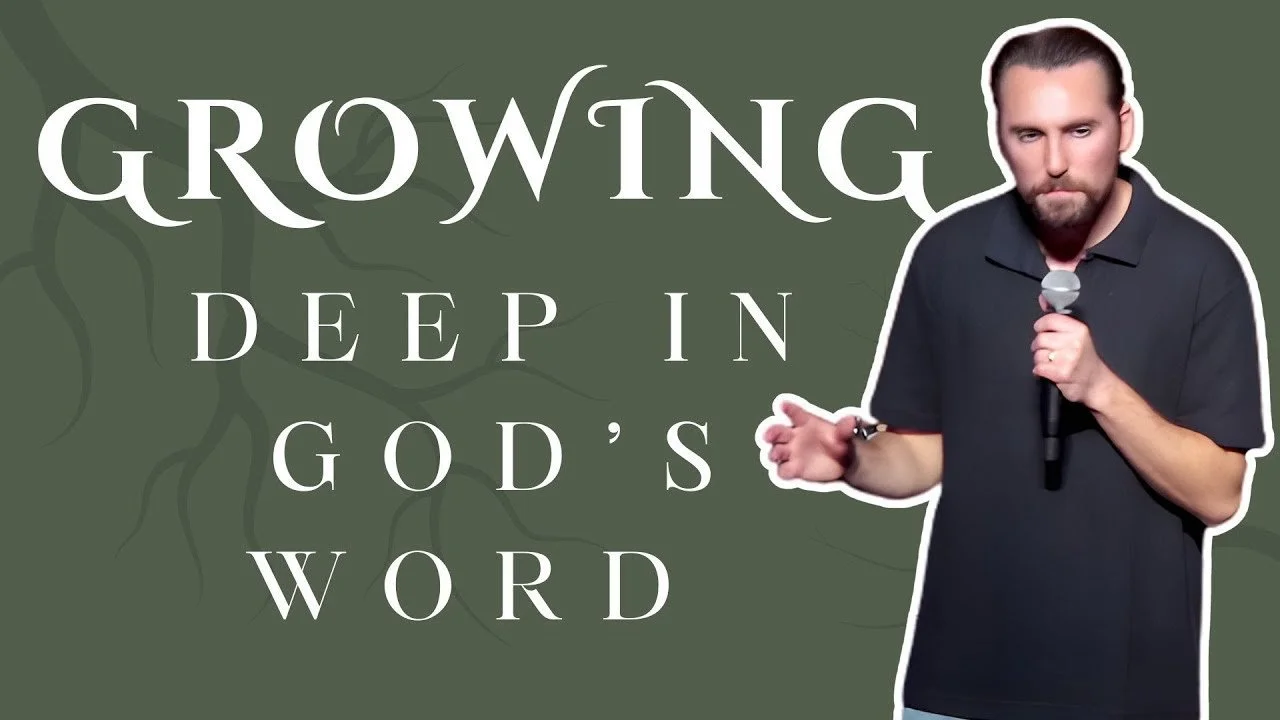
Growing Deeper: How God’s Word Builds a Strong Faith That Lasts
It All Begins Here
Table of Contents:
Shallow Faith vs. Deep Faith
What God’s Word Is—and What It Does
When God’s Word Becomes Just Noise
The Power of Meditating on Scripture
Standing Strong Through Life’s Storms
At the start of a new year, many of us feel the desire for growth—spiritual growth included. But not all growth is the same. A shallow faith may look alive on the surface, yet it can be easily uprooted when pressure, suffering, or temptation comes. At Arroyo Church in Livermore, we’re beginning a new message series called Growing Deeper, focused on exchanging shallow faith for strong faith—faith that is deeply rooted and able to withstand the storms of life.
In the Bay Area, often described as a spiritual desert, God is calling His church to be a life-giving river. That kind of spiritual impact starts with believers whose lives are firmly planted in God’s Word.
Shallow Faith vs. Deep Faith
Scripture paints a clear picture of spiritual depth. A newly planted flower can be pulled up with little effort, but a mature tree—rooted for years—cannot be moved without great force. The same is true of our faith. When our faith is shallow, we are easily shaken by life’s pressures. But when we grow deeper, we become strong, resilient, and unmovable.
What God’s Word Is—and What It Does
The apostle Paul writes in 2 Timothy 3:16–17 that all Scripture is God-breathed and useful for teaching, rebuking, correcting, and training in righteousness. The Bible is unlike any other book. It is not fantasy, opinion, or self-help—it is unchanging truth inspired by God Himself.
While the Bible was not written directly to us, it was written for us. Understanding the original context allows God’s Word to speak accurately and powerfully into our lives today. When we submit to Scripture, it teaches us who God is, reveals who we are, and equips us to live out our faith in meaningful ways.
When God’s Word Becomes Just Noise
James 1:22 warns us not to merely listen to the Word, but to do what it says. It’s possible to attend church regularly, hear sermons, and even read Scripture—yet remain unchanged. When God’s Word becomes background noise rather than a blueprint for life, transformation never happens.
Distractions, busyness, shame, or even familiarity can block God’s Word from reaching our hearts. But when we choose obedience, Scripture moves from information to transformation.
The Power of Meditating on Scripture
True change happens when we meditate on God’s Word. Joshua 1:8 and Psalm 119:11 both highlight meditation as the pathway to obedience and spiritual strength. Meditation means slowing down, thinking deeply, and allowing Scripture to sink into every area of life.
Just as marinating food transforms flavor over time, meditating on Scripture reshapes our character. Even a single verse, thoughtfully considered, can speak into marriage, work, habits, fears, and future decisions. This intentional practice allows God’s Word to take root far below the surface.
Standing Strong Through Life’s Storms
Jesus teaches that those who hear His words and put them into practice build their lives on a rock. Storms will come—suffering, loss, temptation—but storms don’t change who we are; they reveal our foundation.
God’s Word anchors us with promises: He is with us in suffering, He works all things for good, and He offers hope beyond this life. In moments of temptation, Scripture reminds us that sin’s pleasures are fleeting and that God always provides a way out. A life built on God’s Word does not collapse when storms hit—it stands firm.
God’s Word is not just text on a page—it is Jesus Himself, full of grace and truth. When we build our lives on His Word, we find forgiveness, direction, strength, and hope. As we grow deeper in Scripture, our faith becomes stronger, our lives more aligned with God’s purposes, and our impact greater in a world that desperately needs living water. If you’re ready to move beyond shallow faith, start by opening God’s Word—and letting it shape everything.