
Unstoppable Joy Starts Here: Why Grace Is God’s Greatest Gift (Philippians 1:1–11)
Table of Contents:
Unstoppable Joy vs. Circumstantial Joy
Peace Comes From Grace
Grace Carries You to Completion
How to Respond: Grow in What You Know
Two Results of Growing in Grace: Discernment and Godliness
A Simple Invitation to Receive Grace
Joy can feel fragile. When life is smooth—work is stable, relationships are strong, the future looks bright—joy comes easily. But when loss hits, when anxiety rises, when the dream slips through your fingers, joy can disappear overnight. That’s why God doesn’t just want you to have circumstantial joy—He wants you to have unstoppable joy.
In Acts 16, the apostle Paul shows us what unstoppable joy looks like. Beaten and imprisoned for his faith, Paul spends the night praising God in a prison cell. That kind of joy isn’t denial. It isn’t pretending pain doesn’t exist. It’s a deeper strength rooted in the Lord—“the joy of the Lord is my strength.”
As we begin an eight-week journey through Philippians, we’re starting where Paul starts: with grace. Because the truth is simple and life-changing—grace is the greatest gift. And when you receive grace, you don’t just get a theology lesson; you get peace, perseverance, and a new kind of joy that can’t be stolen by circumstances.Unstoppable Joy vs. Circumstantial Joy
Circumstantial joy comes when life goes your way: the job offer, the house, the relationship, the milestone you worked for. But unstoppable joy is what remains when life doesn’t cooperate—when you grieve, when you get rejected, when you feel stuck, when the future feels uncertain.
Paul’s letter to the Philippians is loaded with joy language—“joy” and “rejoice” show up again and again—yet Paul is writing from prison. That’s not an accident. It’s a preview of the kind of joy Jesus gives: not shallow happiness, but holy strength.
In a place like the Bay Area—where success is celebrated but souls are often weary—we need more than positive thinking. We need something that runs deeper than the next achievement. We need a river in the spiritual desert. And grace is where that river begins.
Peace Comes From Grace
Paul opens his letter with a familiar blessing: “Grace and peace to you…” (Philippians 1:2). Notice the order—grace always comes before peace. That’s intentional.
Grace is God’s unearned love. It’s forgiveness you didn’t earn. It’s belonging you didn’t achieve. It’s adoption into God’s family, not because you performed well, but because Jesus did. That’s what makes Christianity different from every works-based system: Christianity is grace-based.
Here’s the key: you cannot have peace from God until you have peace with God.
A lot of people want God’s peace the way they want a quick fix—“God, calm my anxiety, solve my problem, help me feel better”—without wanting a restored relationship with Him. But peace isn’t a product. It’s a relationship. It flows from reconciliation.
Romans 5 says it clearly: because we’ve been justified by faith, we have peace with God—and that peace comes through access into grace. In other words, peace grows where grace is received.
Biblical peace isn’t the absence of pain. It’s the presence of God. You can be on vacation with an ocean view and still feel empty. You can “have it all” and still have no peace. Why? Because no person, place, or thing can carry the weight your soul was designed to place on God alone.
Grace invites you home. Peace meets you there.
Grace Carries You to Completion
In Philippians 1:6, Paul drops a promise that has steadied believers for generations:
“He who began a good work in you will carry it on to completion…”
This is about God’s faithfulness, not your perfection. Paul is saying: God doesn’t rescue you and then leave you to limp the rest of the way. He doesn’t start a “good work” and then lose interest halfway through. God finishes what He starts.
Picture it like this: sin leaves us at the bottom of a pit we dug ourselves—broken, unable to climb out. Grace doesn’t just toss down a ladder. Grace reaches in, lifts you out, and carries you forward. The same grace that saves you is the grace that sustains you.
That’s why this matters for real life: when you fail, when you drift, when you’re exhausted, when you feel like you’ll never change—grace doesn’t shrug. Grace carries. God’s promise is not “maybe.” It’s not “if you behave perfectly.” It’s “I will carry it on to completion.”
And if you’re thinking, “I’m not sure I can keep up this faith thing,” you’re closer to the truth than you realize. You can’t carry yourself to the finish line. But you don’t have to. You fall into the Father’s arms by faith, and He holds you.
How to Respond: Grow in What You Know
Paul’s prayer in Philippians 1:9–11 is that their love would “abound more and more in knowledge and depth of insight.” This isn’t just knowing facts about God. It’s knowing God personally—experientially, relationally.
You can know about someone and still not know them. That’s why grace isn’t meant to stay theoretical. God wants you to receive His love—and then grow in it.
Growth takes time, but not just time—time plus intentionality. You can be around church for years and still remain spiritually stagnant. Or you can decide to pursue Christ with purpose: Scripture, prayer, community, and daily practice.
A simple next step from this series is powerful: read Philippians each week, and a portion each day. Let the truths shape Monday through Saturday—not just Sunday.
Two Results of Growing in Grace: Discernment and Godliness
When grace grows in you, two things begin to show up:
1) Discernment
Paul says spiritual growth helps you “discern what is best.” Discernment isn’t just “What should I do?” It’s “Who do I know?” The more you know God’s heart, the more you recognize His wisdom in real decisions—relationships, work, priorities, next steps.
2) Godliness
The more you receive God’s love, the more love spills out of you. This is the upside-down way of Jesus: you don’t become godly by clenched fists and willpower alone. You become godly by learning to rest in grace—because “we love because He first loved us.”
In a region that often runs on pressure, performance, and proving yourself, grace becomes a refreshing river—especially here in Livermore and throughout the Bay Area’s spiritual desert. It’s God saying, “Come to Me. Receive. Be made new. And then live changed.”
A Simple Invitation to Receive Grace
Grace is offered freely, but it must be received. Like a gift in a card—if you never open it, you never enjoy what was given. God’s grace is the greatest gift because it lasts forever. It doesn’t spoil. It doesn’t fade. And it leads to a joy that circumstances can’t steal.
If you’ve never received that grace, today can be your day to begin—simply opening your heart to Jesus by faith. And if you already belong to Him, today is your reminder: rest in peace, trust His promise to complete the work, and grow in what you know.Unstoppable joy isn’t manufactured. It’s received. Grace brings peace, grace carries you to completion, and grace invites you into a life of growth—discernment, godliness, and deep confidence in God’s faithfulness. In a world that demands you earn everything, Jesus offers the gift you could never earn: grace. And that grace becomes the river that sustains you, even in the spiritual desert.
Keeping in Step with the Spirit: Finding God’s Rhythm Instead of Religious Striving (Galatians 5)
Table of Contents:
Why “Walking by the Spirit” Matters
The Two False Cadences That Wear Us Out
Cadence 1: Fix Your Mind on Christ
Cadence 2: Soften Your Heart Before God
Cadence 3: Walk in Spirit-Filled Confidence
When You Feel Like You’re Falling Apart
A Next Step for This Week
Sometimes the most important thing we can do in our faith is pause and ask: What rhythm am I living by? Not just what we believe on paper—but what’s actually shaping our pace, our peace, and our endurance.
In Galatians 5, the apostle Paul gives us a simple, powerful invitation: “Since we live by the Spirit, let us keep in step with the Spirit.” (Galatians 5:25). That phrase—keep in step—isn’t abstract. It’s relational. It’s walking-close language. It’s the opposite of striving, performing, and pretending we can sustain a thriving spiritual life on our own strength.
And in a place like the Bay Area—where life can feel fast, pressured, and spiritually dry—this message lands right where we live. Arroyo Church exists to be a river in the spiritual desert, and rivers don’t run on hustle. They run on a source. The Spirit invites us back to the Source.
Why “Walking by the Spirit” Matters
Paul’s words in Galatians aren’t a gentle suggestion. They’re more like an alarm. The church in Galatia had started in grace—but drifted into a different cadence: trying to maintain their faith through performance, legalism, and self-effort.
Paul calls it what it is: a conflict.“The flesh desires what is contrary to the Spirit…” (Galatians 5:17)
But the solution isn’t “try harder.” The solution is walk closer.
Walking by the Spirit isn’t about hype or emotionalism. It’s about a life that steadily produces what Paul calls the fruit of the Spirit: love, joy, peace, patience, kindness, goodness, faithfulness, gentleness, and self-control (Galatians 5:22–23). Those aren’t just “values.” They’re the result of alignment.
The Two False Cadences That Wear Us Out
The sermon named two false rhythms that look spiritual on the outside but drain us from the inside:
1) Legalism
Legalism can look like devotion, but it’s actually a performance mindset—trying to earn what Jesus already gave. It “looks like Christianity,” but it’s often fueled by pride and approval-seeking rather than love and surrender.
2) Living by the flesh (self-reliance)
Even if we don’t call it legalism, we can slip into “I’ll fix myself” faith. It’s exhausting. And it quietly trains our hearts to believe God helps those who help themselves—rather than God strengthens those who depend on Him.
Paul’s invitation is freedom: walk by the Spirit.
Cadence 1: Fix Your Mind on Christ
One of the most practical truths from the message was this: Paul doesn’t start with behavior—he starts with attention.
When your mind is fixed on Christ, your life starts to align with the Spirit. That’s why Scripture repeatedly calls us to “set our minds” and “set our hearts” on Jesus.
Colossians 3 says:
“Set your hearts on things above… set your minds on things above, not on earthly things.” (Colossians 3:1–2)
This isn’t “be more religious.” It’s “be more aware.” Where does your mind go first—your schedule, your stress, your phone, your fear… or Christ?
The sermon used a vivid image: walkie-talkies. Hearing clearly depends on proximity and being on the right channel. Many of us wonder why God feels quiet—while we’re tuned into everything else.
A simple prayer can be a powerful shift:
“Holy Spirit, help me today.”
Not because longer prayers earn more, but because humble dependence puts you back on the right frequency.
And here’s the heart-level motivation: Jesus was thinking about you on His way to the cross. When we remember that, worship becomes less like effort and more like response.
Cadence 2: Soften Your Heart Before God
The second cadence is about posture, not perfection: soften your heart.
Ezekiel 36 gives a promise, not a threat:
“I will give you a new heart… and I will put my Spirit in you and move you to follow my decrees.” (Ezekiel 36:26–27)
Notice the order:God gives the Spirit
The Spirit produces obedience
Not the other way around
The sermon also used a car alignment story: if your wheels are out of alignment, you can still drive… but you’ll wear out faster. That’s what happens spiritually too. When we’re out of alignment with the Spirit—rushed, hardened, distracted—we lose endurance.
Here’s a helpful “dashboard light” idea: when you notice a lack of love, joy, peace, patience… don’t just shame yourself. Treat it like a signal: something is out of alignment. It’s an invitation back to the presence of God, where there’s “fullness of joy.”
Cadence 3: Walk in Spirit-Filled Confidence
The third cadence is the fruit of the first two: Spirit-filled confidence.
Not cockiness. Not self-made bravado. Confidence that comes from closeness.
When you’re close to God:you pray differently
you face pressure differently
you lift your head instead of living in shame
The message reminded us: we weren’t saved just to survive. We were saved to be empowered.
When You Feel Like You’re Falling Apart
One of the most memorable moments in the sermon was the illustration of a broken Bible binding—the pages intact, the truth still there, but the whole thing one moment away from falling apart.
That’s how many people feel: “I know what’s true… but I’m fraying.”
The encouragement was simple and deep: rest in God’s presence, and He puts you back together. Not by condemnation, but by closeness. Not by striving, but by surrender.
Hebrews 10 reminds us that priests stood daily because their work was never finished—but Jesus sat down because the work is finished. That means you don’t come to God as an orphan trying to earn love. You come as a son or daughter with access to the throne of grace.
And if the enemy is under Jesus’ feet, then he’s not over your head. Your sin, shame, fear, and anxiety don’t get the final word. Jesus does.
A Next Step for This Week
If you want to “keep in step with the Spirit,” try this simple practice for the next seven days:Morning (1 minute): “Jesus, I fix my mind on You.”
Midday (30 seconds): “Holy Spirit, align my heart.”
Evening (2 minutes): Ask: “Where did I feel out of step today—and what might You be inviting me into tomorrow?”
That’s not performance. That’s relationship. And it’s how rivers keep flowing—one steady step at a time.
The cadence of the Holy Spirit isn’t complicated, but it is countercultural—especially in a hurried, achievement-driven world. Paul’s invitation still stands: walk by the Spirit. Fix your mind on Christ. Soften your heart before God. And step into Spirit-filled confidence—not because you earned it, but because Jesus finished the work.
If you’re in the Bay Area and you’ve felt the spiritual dryness, you’re not alone. God is building His church to be a river in the desert—and He wants your life to be part of that flow. If you’re ready for a fresh touch from heaven and a steadier rhythm of grace, come walk with us.
Growing Deeper in Prayer: How Psalm 13 Teaches Us to Lament, Ask, and Trust God’s Love (Livermore, CA)
Table of Contents:
Why God Wants a Deeper Prayer Life
Step 1: Learn to Lament
Step 2: Ask God to Open Your Eyes
Step 3: Move From Lament to Looking at God’s Love
A Simple Prayer to Go Deeper This Week
Imagine someone took your phone away, dropped you in the woods, and said, “You have one hour to pray—alone.” How would you feel? Excited? Nervous? Unsure what you’d even say after five minutes? That question isn’t meant to shame anyone—because short prayers can absolutely be powerful. But it does spotlight something God wants for all of us: not just prayers that are frequent, but prayers that are deep.
At Arroyo Church here in Livermore, CA, we talk a lot about growing—growing deeper in the Word, growing deeper in community, and growing deeper in prayer. Because the purpose of your life isn’t merely to be “religious.” The purpose of your life is a personal relationship with Jesus—and one of the primary ways we step into that relationship is through prayer.
Psalm 13 gives us a picture of deep prayer. It’s raw, honest, and real. And it offers three steps that can move your prayer life from shallow to rooted—like a tree that can withstand life’s storms.
Why God Wants a Deeper Prayer LifeA shallow faith is easy to uproot. A deeper faith gets anchored. And prayer is one of the main ways our faith grows roots. Deep prayer doesn’t mean fancy words. It doesn’t mean you have to start every prayer with a polished script. In fact, Psalm 13 starts with the kind of words many of us hesitate to pray out loud: “How long, Lord?”That honesty matters—especially in the Bay Area, where many people live in what can feel like a spiritual desert. But God is forming Arroyo Church to be a river in the spiritual desert—a place where real people can bring real pain to a real Savior.Step 1: Learn to LamentPsalm 13 begins with lament:“How long, Lord? Will you forget me forever?… How long will you hide your face from me?” (Psalm 13:1–2)Lament isn’t just complaining. Lament is honestly expressing your pain to God. Scholars often note that a significant portion of the Psalms are laments—because life is tough, storms are real, and suffering is part of the human story.Here’s the surprising truth: lament is not irreverent. It’s relational. If you want a deep relationship with the Lord, you have to be honest with Him. God isn’t looking for a fake relationship filled with religious lines and happy masks. He wants the real you.Think about the healthiest human relationships you have. You’re honest with the people you’re closest to. You don’t share your deepest burdens with a stranger you just met in a checkout line. In the same way, a lack of lament often reveals a lack of depth. If we never bring our real pain to God, are we actually close to Him—or just performing?When should you lament? Psalm 13 gives four examples through David’s questions:
When you feel forgotten by God: “Will you forget me forever?”
When you feel far from God: “How long will you hide your face from me?”
When anxiety or depression is heavy: “How long must I wrestle with my thoughts… and have sorrow in my heart?”
When you’re dealing with conflict or attack: “How long will my enemy triumph over me?”
Lament doesn’t always remove the problem—but it can change your perspective. It’s the moment you say, “God, this burden is crushing me. I can’t carry it. I’m bringing it to You.” And that’s often where peace begins.Step 2: Ask God to Open Your EyesAfter lamenting, David shifts from questioning to asking:“Look on me and answer… Give light to my eyes…” (Psalm 13:3–4)In other words: “God, help me see.” Trials can cloud our vision. Pain can create spiritual fog. Here in the Bay Area, we understand fog—it can roll in so thick you can’t even see what’s right in front of you. But fog doesn’t erase reality. When fog covers the sun, the sun still exists. When suffering clouds your view of God, His promises still remain true—even if you can’t feel them.This is where a powerful prayer comes in: “God, open my eyes.” Scripture echoes this idea. Paul prays in Ephesians that “the eyes of your heart may be enlightened” so you can know hope (Ephesians 1:18). When God “gives light,” we don’t just see our circumstances—we see our Savior in our circumstances.And what does God want you to see? Hope. Biblical hope isn’t wishful thinking; it’s a confident expectation of a better future. For the Christian, that hope is anchored in Jesus—His death and resurrection, the forgiveness of sins, and the promise of eternity with Him. It’s the hope of heaven: a future where tears are wiped away, and death, depression, and disease do not get the final word.Sometimes the reason we’re not experiencing that hope isn’t because God is withholding—it’s because we’re not asking. Jesus says, “Ask and it will be given to you; seek and you will find; knock and the door will be opened” (Luke 11:9–13). This isn’t a blank check for “anything I want.” It’s an invitation to ask for what aligns with God’s will—like wisdom, endurance, peace, and the Holy Spirit’s work in us.If you’re in a season where you can’t see clearly, try praying something simple and bold:“Lord, give light to my eyes. Open my eyes to see You again.”Step 3: Move From Lament to Looking at God’s LovePsalm 13 ends with a turn:“But I trust in your unfailing love… My heart rejoices in your salvation.” (Psalm 13:5–6)Lament is a starting point, not an ending point. If we only lament, we can get stuck staring at the storm. Deep faith laments—and then looks up.What does it look like to look at God’s love?
Trust His unfailing love.Feelings are real, but they’re not reliable. There will be days you feel like God isn’t near. But His love doesn’t rise and fall with your emotions. Scripture says His compassions “never fail… they are new every morning” (Lamentations 3:22–23). People’s love can fail. God’s love does not.Sometimes the most honest prayer is:“Lord, I believe—help my unbelief. Help me trust Your love when I can’t feel it.”
Rejoice in His salvation.Christian joy is different than the world’s joy. The world’s joy depends on circumstances. But the joy of the Christian is rooted in what Jesus has already done. Titus reminds us: God “saved us—not because of righteous things we had done, but because of his mercy” (Titus 3:3–5). Saved isn’t future tense. It’s finished. In Christ, you’re forgiven. You belong. You have hope that cannot be taken from you.
And because of Jesus, prayer isn’t restricted access. You’re not approaching a throne of judgment—you’re approaching a throne of grace. Hebrews says we can approach with confidence to receive mercy and grace in our time of need (Hebrews 4:16).A Simple Prayer to Go Deeper This WeekIf you want to practice these three steps, try this flow sometime this week—maybe on a walk, in your car, or yes… even alone without distractions:
Lament: “God, here’s what hurts. Here’s what I’m afraid of. Here’s what I don’t understand.”
Ask: “Lord, give light to my eyes. Help me see You and the hope You’ve promised.”
Look: “Jesus, I trust Your unfailing love. I rejoice in Your salvation. You have been good to me.”
If you’re new to faith—or you feel far from God—this can be your starting point. And if you’re ready to take a next step with a church family in Livermore, we’d love to meet you this Sunday. You can learn more about who we are at About Arroyo Church or plan your visit at Plan Your Visit.
Deep prayer isn’t about having the right “Christian” lines. It’s about a real relationship with a real Father. Psalm 13 teaches us that depth often grows through honesty: lament what’s true, ask God for light, and then lift your eyes to His unfailing love and saving grace.
In a region that can feel spiritually dry, Jesus is still forming living rivers—people who can suffer honestly, hope confidently, and pray boldly. Wherever you are today, don’t wait. Go to the throne of grace today. He’s listening—and He loves you.
Growing Deeper in Community: Why You Were Never Meant to Follow Jesus Alone (Livermore, CA)
Table of Contents:
Church Isn’t an Event—It’s a Community
Step 1: Make a Commitment to Community
Step 2: Give and Receive Caring Community
Step 3: Christ-Centered Community Calls Out Sin
Step 4: Confession Is Required for Real Community
Communion and the Community Jesus Died For
A Simple Next Step in Livermore
You were not meant to live life alone. That’s not just a nice thought—it’s a deeply biblical reality. Think about how quickly isolation unravels a person. In Cast Away, Tom Hanks’ character survives a plane crash and spends years alone on an island. He does what any human eventually does when cut off from meaningful relationship: he breaks down. (Wilson the volleyball becomes his closest friend for a reason.)
It’s funny until it’s not—because isolation does something similar to us spiritually and emotionally. When we’re disconnected from community, it becomes easier to drift into depression, easier to fall into temptation, and easier to step outside of God’s plan for our lives. God created you for relationship with Him, yes—but also for relationship with other people. Christianity isn’t a “Jesus and me” solo project. It’s a shared life.
As we continue the Growing Deeper series, this message is about Growing Deeper in Community—and how a church in Livermore can become more than a place you attend. It can become a spiritual family you belong to. In the Bay Area—what many describe as a kind of spiritual desert—God is forming His people into a life-giving river. And rivers don’t run in isolation. They flow, connect, and bring life wherever they go.
Church Isn’t an Event—It’s a Community
A common misconception in the American church is that “church” equals a Sunday production—like a weekly show you watch, then leave. But church isn’t meant to be a spiritual movie theater. It’s meant to be a community that follows Jesus together.
That’s why one of the biggest shifts a person can make isn’t just attending more consistently—it’s moving from attending to belonging. There’s a big difference between watching a game and being on the team. Watching from the stands is low-cost, low-commitment, and low-connection. Being on the team means you know people, you’re invested, and you share a mission.
Step 1: Make a Commitment to Community
The first step to growing deeper in community is simple—and challenging: make a commitment. Romans 12:10 says, “Be devoted to one another in love. Honor one another above yourselves.”
Devotion isn’t the same as an option. Lunch plans are optional. Your schedule preferences are optional. But biblical community is meant to be devotion—a priority that shapes how you live.
A good question to ask yourself is: Do I treat belonging to a church community as a devotion or an option? If you want to grow deeper, start here. Decide that community matters enough to schedule around, show up for, and invest in.
Practical next steps can be as straightforward as joining a group, meeting people after service, or taking a “connect” step that helps you move from familiar faces to real relationships. If you’re newer, consider learning more through About Arroyo Church and taking the simplest next step through Plan Your Visit.
Step 2: Give and Receive Caring Community
Healthy community isn’t just friendly—it’s caring. 2 Corinthians 1:3–4 describes God as “the Father of compassion and the God of all comfort,” who comforts us so that we can comfort others with the comfort we’ve received.
Life includes crises you cannot fix: loss, diagnosis, disappointment, betrayal, grief. In those moments, what you need isn’t a quick solution—you need comfort. God gives comfort through His compassion and nearness, and then He often extends that comfort through His people.
Here’s the key: community is not just about receiving care; it’s also about giving it. Many people drift into one of two unhealthy extremes:
Only giving care (and never receiving), which often leads to burnout.
Only receiving care (and never giving), which often slides into selfishness.
Biblical community does both. We carry each other’s burdens. We show up. We pray. We sit in grief. We celebrate wins. We remind each other: you’re not alone. In a fast-paced Bay Area culture, that kind of steady, compassionate presence can feel like water in a spiritual desert—like a river of grace running through everyday life.
Step 3: Christ-Centered Community Calls Out Sin
This one is “spicier,” but it’s loving when done correctly: Christ-centered community calls out sin. Psalm 141:5 frames it surprisingly positively: “Let a righteous man strike me—that is a kindness… let him rebuke me—it is oil on my head.”
Why is a rebuke called kindness? Because love doesn’t let someone run into traffic. Real love protects. Real love warns. Real love pulls someone back from danger.
That said, many people carry church wounds because they’ve seen “calling out” done with pride, harshness, or self-righteousness. That’s not biblical correction—that’s spiritual ego. Jesus-shaped correction is truth with love, not truth as a weapon.
Proverbs 27:6 adds another layer: “Wounds from a friend can be trusted, but an enemy multiplies kisses.” A friend who truly loves you will tell you the truth—not to tear you down, but to build you up.
If your closest “community” never challenges you, never helps you grow, and never lovingly points you back toward Jesus, you may have companionship—but not biblical community. The goal isn’t judgment; the goal is transformation.
Step 4: Confession Is Required for Real Community
James 5:16 says, “Confess your sins to each other and pray for each other so that you may be healed.” That’s direct: confession is connected to healing.
Why do we avoid confession? Because it feels safer to be fake. Sin leads to shame, and shame leads to hiding. We put on the mask, smile, and keep people at arm’s length. But masks don’t produce healing—light does.
Revealing is healing. Confession brings healing in at least two ways:It opens the door to God’s forgiveness. (When we confess, we stop pretending and start receiving grace.)
It breaks the fraud feeling. When you’re honest, you begin walking in integrity—and you experience love more deeply because people are loving the real you, not the version you perform.
Confession also needs urgency. Jesus teaches reconciliation should be quick (Matthew 5:23–24). Don’t delay what God wants to heal. Confess your part. Own your actions. Take initiative toward peace.
Communion and the Community Jesus Died For
One of the most powerful closing moments of the message is communion—because communion reminds us that Jesus didn’t only die to reconnect you to God; He also died to form you into a family. Ephesians 2 emphasizes that those who were far away have been brought near by the blood of Christ—and now we are “members of His household.”
That means church isn’t a crowd. It’s a household. It’s a family formed by grace. And if Jesus was willing to die so you could belong to His family, then community isn’t optional. It’s part of the gift.
A Simple Next Step in Livermore
If you’re in Livermore—or anywhere in the Tri-Valley—and you’ve been attending church without truly belonging, this is your invitation: take one step toward community this week. Don’t wait until you “feel ready.” Start small. Meet someone. Join a group. Ask for prayer. Take the mask off with someone trustworthy.
In a region many call a spiritual desert, God is building a river—people who carry comfort, truth, confession, and grace into everyday life. And you don’t have to be alone to become who Jesus made you to be.
Growing deeper in community isn’t about being more social—it’s about being more formed by Jesus. Community strengthens you personally because it holds you up spiritually. Make the commitment. Give and receive care. Allow loving truth. Practice confession. And remember: Christ died so you could belong—not just to Him, but to His people.
If you’re ready to take a next step, start here: Plan Your Visit and learn who we are at About Arroyo Church. You were made for this.
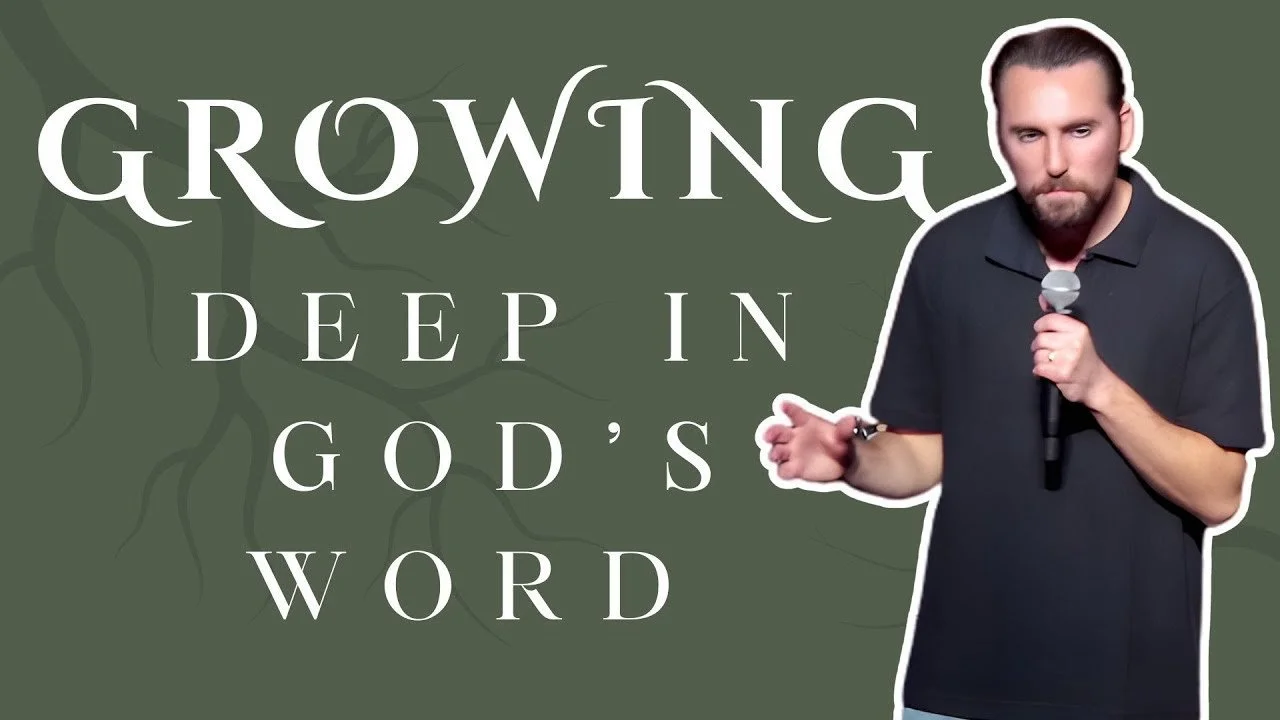
Growing Deeper: How God’s Word Builds a Strong Faith That Lasts
It All Begins Here
Table of Contents:
Shallow Faith vs. Deep Faith
What God’s Word Is—and What It Does
When God’s Word Becomes Just Noise
The Power of Meditating on Scripture
Standing Strong Through Life’s Storms
At the start of a new year, many of us feel the desire for growth—spiritual growth included. But not all growth is the same. A shallow faith may look alive on the surface, yet it can be easily uprooted when pressure, suffering, or temptation comes. At Arroyo Church in Livermore, we’re beginning a new message series called Growing Deeper, focused on exchanging shallow faith for strong faith—faith that is deeply rooted and able to withstand the storms of life.
In the Bay Area, often described as a spiritual desert, God is calling His church to be a life-giving river. That kind of spiritual impact starts with believers whose lives are firmly planted in God’s Word.
Shallow Faith vs. Deep Faith
Scripture paints a clear picture of spiritual depth. A newly planted flower can be pulled up with little effort, but a mature tree—rooted for years—cannot be moved without great force. The same is true of our faith. When our faith is shallow, we are easily shaken by life’s pressures. But when we grow deeper, we become strong, resilient, and unmovable.
What God’s Word Is—and What It Does
The apostle Paul writes in 2 Timothy 3:16–17 that all Scripture is God-breathed and useful for teaching, rebuking, correcting, and training in righteousness. The Bible is unlike any other book. It is not fantasy, opinion, or self-help—it is unchanging truth inspired by God Himself.
While the Bible was not written directly to us, it was written for us. Understanding the original context allows God’s Word to speak accurately and powerfully into our lives today. When we submit to Scripture, it teaches us who God is, reveals who we are, and equips us to live out our faith in meaningful ways.
When God’s Word Becomes Just Noise
James 1:22 warns us not to merely listen to the Word, but to do what it says. It’s possible to attend church regularly, hear sermons, and even read Scripture—yet remain unchanged. When God’s Word becomes background noise rather than a blueprint for life, transformation never happens.
Distractions, busyness, shame, or even familiarity can block God’s Word from reaching our hearts. But when we choose obedience, Scripture moves from information to transformation.
The Power of Meditating on Scripture
True change happens when we meditate on God’s Word. Joshua 1:8 and Psalm 119:11 both highlight meditation as the pathway to obedience and spiritual strength. Meditation means slowing down, thinking deeply, and allowing Scripture to sink into every area of life.
Just as marinating food transforms flavor over time, meditating on Scripture reshapes our character. Even a single verse, thoughtfully considered, can speak into marriage, work, habits, fears, and future decisions. This intentional practice allows God’s Word to take root far below the surface.
Standing Strong Through Life’s Storms
Jesus teaches that those who hear His words and put them into practice build their lives on a rock. Storms will come—suffering, loss, temptation—but storms don’t change who we are; they reveal our foundation.
God’s Word anchors us with promises: He is with us in suffering, He works all things for good, and He offers hope beyond this life. In moments of temptation, Scripture reminds us that sin’s pleasures are fleeting and that God always provides a way out. A life built on God’s Word does not collapse when storms hit—it stands firm.
God’s Word is not just text on a page—it is Jesus Himself, full of grace and truth. When we build our lives on His Word, we find forgiveness, direction, strength, and hope. As we grow deeper in Scripture, our faith becomes stronger, our lives more aligned with God’s purposes, and our impact greater in a world that desperately needs living water. If you’re ready to move beyond shallow faith, start by opening God’s Word—and letting it shape everything.